

Holly Smith runs Nelson's Village Tours, with a focus on how Burnham Thorpe shaped Lord Nelson into a national hero
"I meet such interesting people. Everyone I take on a tour adds something to it," says Holly who runs Nelson's Village Tours.
"In many respects I don't consider myself a Nelson expert, I consider myself a village expert - because this is a village tour."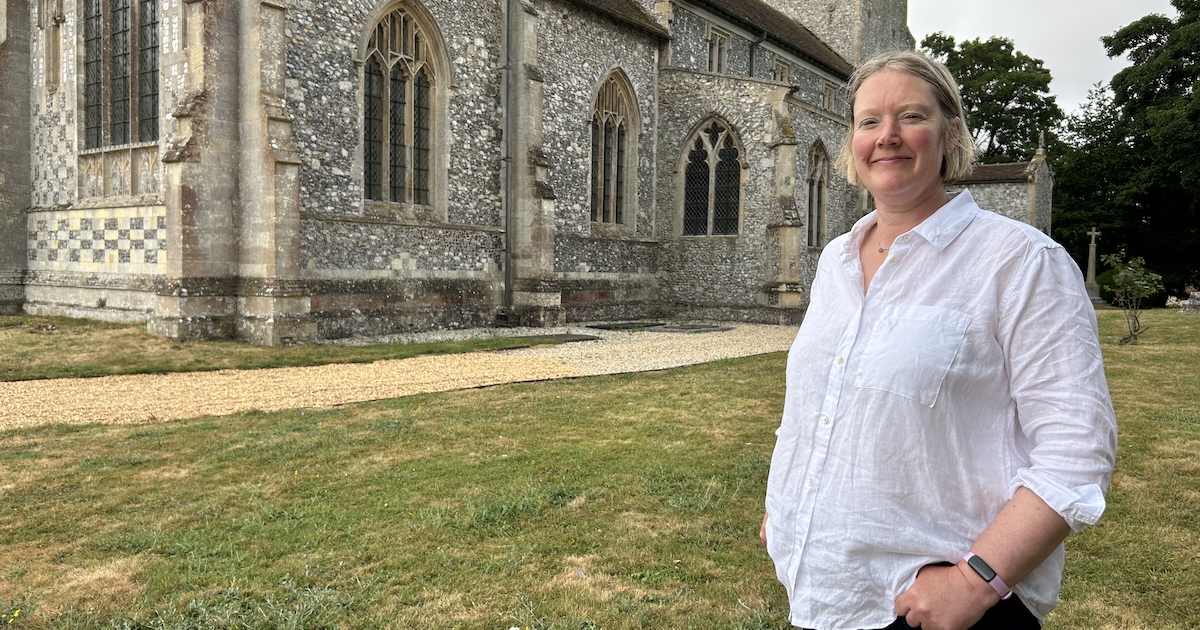
Holly Smith, outside All Saints Church
Since April, Holly, who's lived here all her life, has led almost 30 tours.
The two-hour walk around the village, stops at various significant places, and as we walk along Church Lane, the 52 year old captivates me with her knowledge.
"This road is really important, this road is the very steps that Nelson would have taken, as he went from his home at the rectory to Burnham Overy - where we know he learnt to sail as a boy."
Born in Burnham Thorpe in 1758, Nelson left for the last time in 1793.
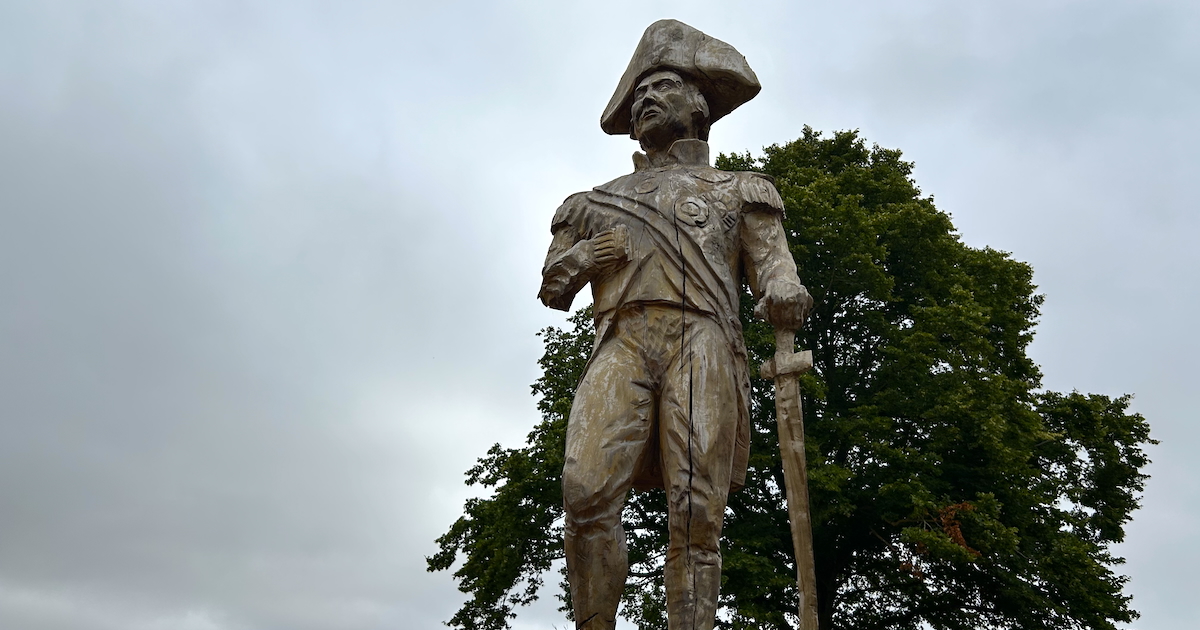
Wooden sculpture of Horatio Nelson, carved by Henry Hapworth Smith
We stop at the wooden carving of the legendary British naval commander - on the village green.
"He spent 5 years here on half pay when he was out of work, and worked the Glebe land for his father," Holly continues.
"He really became an individual who was a bit of a champion of the men in rural Norfolk, he was never short of people to go to sea with, because people respected him."
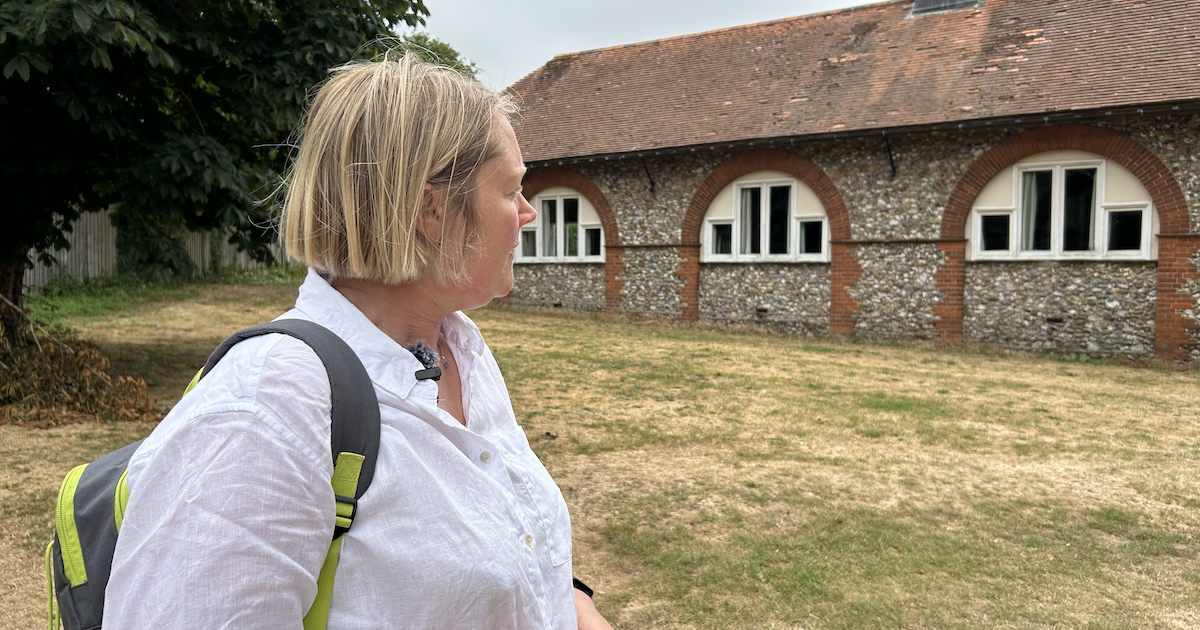
Nelson Memorial Hall
We're now outside the Nelson Memorial Hall, built in 1891, using stone and flint from the Admiral's childhood home. After a quick look inside, full of paintings and items of memorabilia, we walk past the village pub.
"Before Nelson left to take command of HMS Agamemnon, he threw a meal in the upstairs room of that pub for all the men of the village."
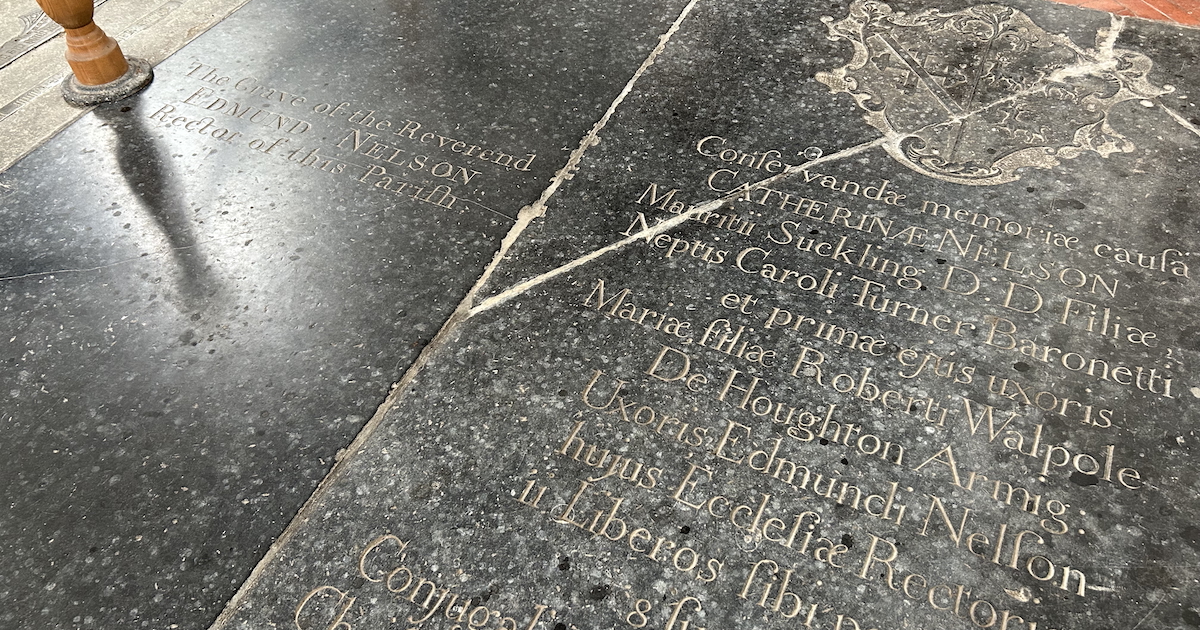
His parents' graves
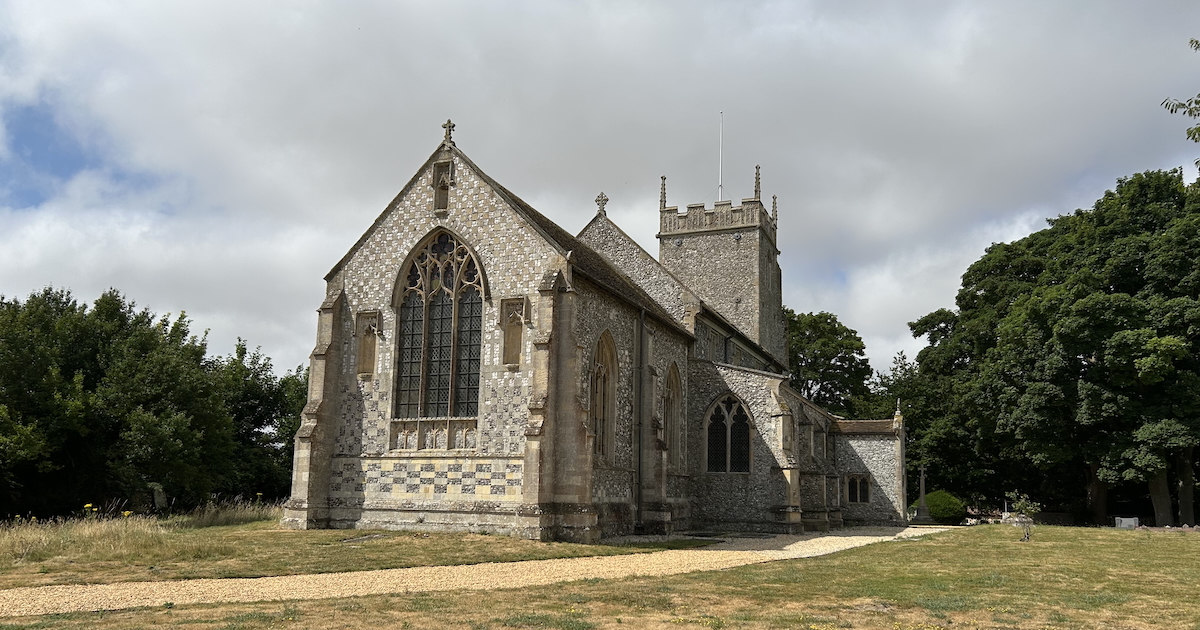
It's then on to All Saints' Church, which houses the graves of his parents, and various keepsakes, such as the HMS Nelson crest and ensign flags.
"At the time that Nelson's father was the rector of this church, it was a complete wreck," Holly tells me, "There was a period of time where the tower had collapsed and come through the roof, and it had landed on the font - the font that Nelson was baptised on, and broke the pedestal.
"He was baptised when he was only a few hours old, as he was a very poorly child, and they didn't think he was going to live."
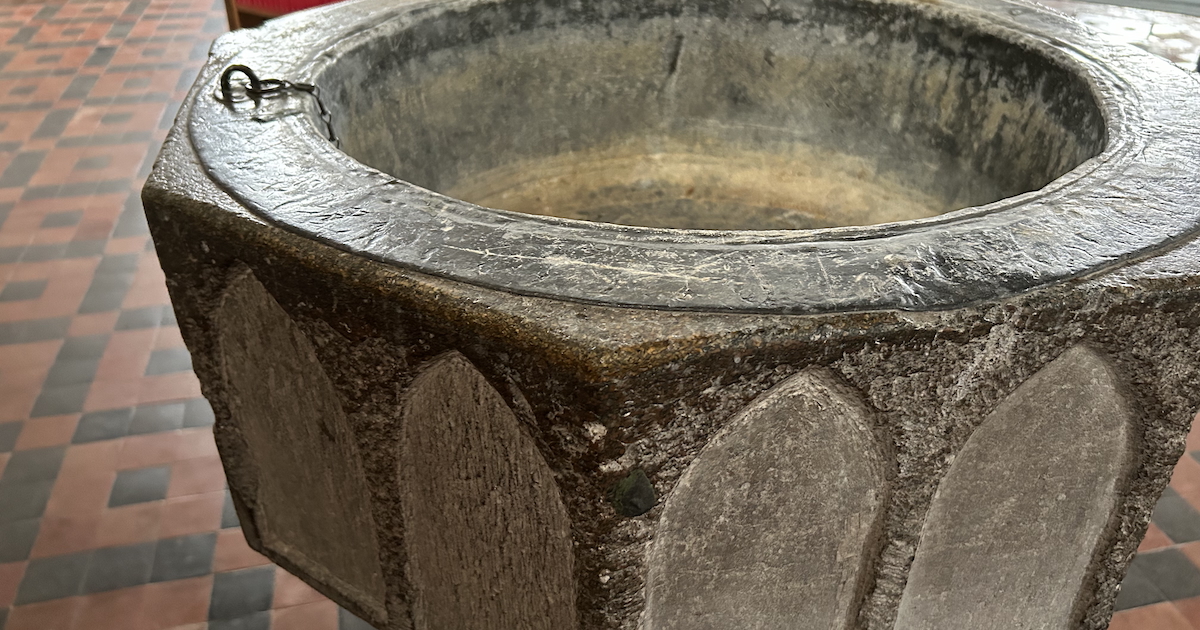
Holly describes discovering new things about the village, and its links to Nelson, as 'addictive'.
"For example, finding out what had happened to the font after it had been damaged - that it had been taken to the rector's garden to be used as a planter, before being reinstated hundreds of years later. It really has an amazing story.
"I had some people from the Nelson's Society come on a tour, who said, "Wow, imagine Nelson being baptised in this font. What an amazing thing it would be to have been baptised here too," and I said, my children were!"
Holly ends with, "It's a funny thing, I've lived in this village all my life and often take it for granted, you don't realise how exciting it is, because it's your every day."
She certainly passes on that excitement - of how this small Norfolk village helped shape the legend Lord Nelson became.
And I walk away with a desire to learn even more - the sign, surely, of a great tour.
Tours run until the end of October, click here for more info:https://www.nelsonsvillagetour...